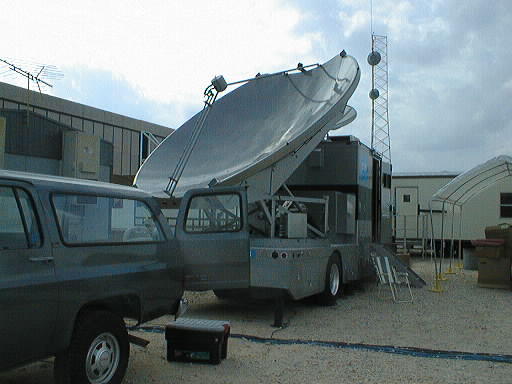
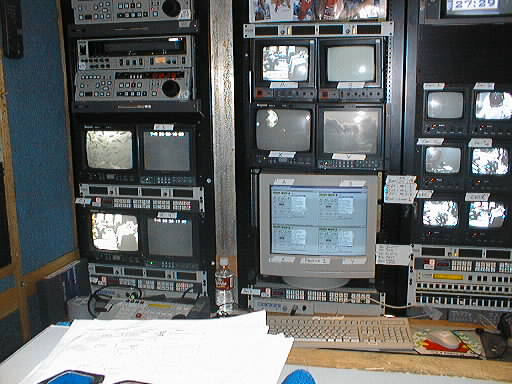
Profile Digital Video Platforms Broadcast Images From Ocean Depths And NASA Space Center—Broadcasts Focus on Work of JASON XI Host Researchers and Argonauts at Aquarius Underwater Habitat and NASA's Johnson Space Center—Focusing on the interaction of basic physical and life science systems as a framework to understand what is essential for life to exist and propagate, the JASON Project provides students worldwide with the experience to study oceans and space in new and exciting ways. This year's project researched the extremes of sea and space by comparing the International Space Station and the Aquarius Underwater Laboratory. The Grass Valley Group, known for exciting technological advances in hardware and software solutions, today announced the loan of three Profile® digital video platforms to the JASON Project. The JASON Project used the Profile platforms as the sole source of on-air playback for a variety of live, interactive one-hour educational programs broadcast from its research sites at the NASA-Johnson Space Center in Houston, Texas and at the Aquarius underwater habitat in Key Largo, Fla. 750,000 students from the United States, Mexico, Australia, Bermuda, the United Kingdom, and other parts of Europe experienced the broadcastsresearch sites at JASON Project to broadcast the NASA-Johnson Space Center in Houston, Texas. This year's JASON Project broadcasts focused on the work of the JASON XI Host Researchers and Argonauts, two multi-disciplinary teams of scientists engaged in research at the Houston and Key Largo sites. During the broadcasts, students had the opportunity to ask questions of researchers—even to assist them with their work. During one segment, for example, students assisted scientists in collecting data about the condition of corals at Conch Reef off the Florida Keys. In addition to its live programming broadcasts programming, the JASON Project featured six Expedition Science Spotlight (ESS) broadcasts. Each 10-minute ESS program focused on a specific expedition topic, such as the challenges of living and working in a space suit and the metabolism of a coral reef. "The Grass Valley Group's generous loan of Profile digital video platforms was instrumental in the success of this high-tech form of education. The Profiles allowed us to have one operator randomly access video clips for eight different channels to supply the three simultaneous program feeds that were sent to the downlink sites. Doing this with tape machines would have been extremely difficult and hard to manage," said Scott Munro, president of Media Arts, the production company for the JASON Project. "The JASON Project can only use the highest-quality equipment. That's why it's so important that advanced leaders such as the Grass Valley Group be involved," said Tim Armour, executive director of the JASON Project. The JASON Project has its roots in discovery. After locating the wreck of the RMS Titanic, Dr. Ballard received thousands of letters from students around the world wanting to go with him on his next expedition. To excite and engage them in science and technology and to motivate and provide professional development for their teachers, Dr. Ballard formed the JASON Project. A year-round educational experience, the JASON Project is supported by extensive professional development for teachers and award-winning interdisciplinary curricula. Resources on the Internet (www.jasonproject.org) let students collect data and collaborate with peers around the world to form hypotheses. The Project culminates with two weeks of live, interactive satellite broadcasts from expedition sites, letting students question researchers and operate scientific equipment from thousands of miles away. "The Grass Valley Group believes in the importance of using the most advanced teaching methods and technologies for today's students," said Tim Thorsteinson, president and chief operating officer of the Grass Valley Group. "We are proud to be able to provide the Profile digital video platform as the sole source for on-air playback of the daily JASON Project broadcasts." Widely regarded as the cornerstone of the transition to digital content creation and distribution, the Grass Valley Group's Profile digital media platform line is also the industry's most open, supporting JPEG, MPEG, DVCPRO, and HD formats today and MPEG Transport Streams (MTS) in the future. The Profile family includes the recently introduced Profile XP Media Platform, a portal for rapid access, management, and distribution of video, audio, and data assets that maintains the broadcast-quality video and audio for which the Profile video server line is known. The Grass Valley Group is a privately held digital broadcast and video company at the forefront of the transition to digital transmission and video content production and has more than $2 billion of equipment installed worldwide. Whether it's distributing video over the air, through digital broadcast facilities and across standard data networks, or providing the industry's best video storage and production products, the Grass Valley Group has the digital solutions for the world's media markets—from broadcasting and digital cinema to Webcasting and Xtreme retailing. Its product lines include the Emmy® award-winning Profile digital video platform, Emmy-award winning Grass Valley™ switchers, and Grass Valley router and modular lines. For the latest Grass Valley Group product information, see www.grassvalleygroup.com. # |
|
|
||||||||||||||||||||||||
 #