Key Features
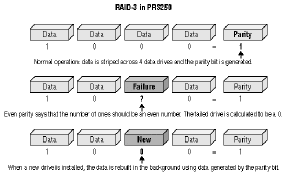
Staying On-Air On TimeReliability and quality are primary concerns for most users of Profile Professional Disk Recorders, especially if they're engaged in on-air broadcast applications. They must be able to recover from failures quickly without data loss, interruption in service, or loss of video quality. The PRS 250/255 answers these needs by providing protection from disk, power supply, and fan failures. Data ProtectionDigital systems have proven to be extremely reliable, especially when compared to analog equipment. The most likely cause of failure is related to mechanical or power supply problems. The PRS 250/255 keeps your system on-air when these disk, fan, or power supply problems occur. These components are hot swappable and data is rebuilt without interruption to on-air replay. The PRS 250/255 delivers continuous operation of all channels even during repair. Ordinarily if a disk fails, its digital video information is lost or at least temporarily inaccessible, degrading video quality or taking a video server completely out of service -- sometimes resulting in loss of revenue. To guard against loss of airtime the PRS 250/255 uses RAID-3 technology to store additional parity data with the video. In the event of a failed disk drive, this parity data is used to reconstruct the lost data on-the-fly. All channels of the Profile PDR remain on-air with absolutely no interruption in service or loss of signal quality. Another concern for broadcasters is a power supply failure on a key piece of equipment. The Profile PRS 250 contains three power supplies: under normal conditions all three power supplies run at reduced power. In a failure condition the 2 good supplies run at full power, enabling the failed supply to be hot-swaped with a spare without requiring any downtime for repair. All channels of the Profile PDR continue on-air without loss in quality. To safeguard against fan malfunctions, the PRS 250 has a six fan cooling assembly: four fans are adequate for cooling leaving two for backup. The entire fan assembly can be hot swapped, so the Profile PDR continues to operate at full capacity while the failed fans are replaced. RAID TechnologyRAID-0 (PDR Internal Disk Drives)Description: This refers to striping data across a series of disks to achieve higher disk bandwidth. Profile PDR internal disk drives use RAID-0 to achieve high performance. For example, if a drive has a data transfer rate of x Mb/s then striping data across two drives would yield a data transfer rate of 2x Mb/s. Benefit: Provides highest RAID-3 (PRS250)Description: RAID-3 also stripes data across a series of drives, plus it conducts a parity check which is stored on a parity drive. In the PRS250, data is striped across 4 drives and parity is written to a fifth. A RAID-3 array is a parallel access array with all disks operating in unison. It allows a balance between the speed of read and write operations.
RAID-3 in PRS250/255 Benefit: Provides excellent performance plus protection for applications where large amounts of data are transferred (e.g., video clips). RAID-5Description: Similar to RAID-3 except there is not a dedicated parity drive. The parity data is spread across all drives. Also, in a RAID-5 array, the disks can operate independently of each other. RAID-5 allows faster read than write operations. Benefit: Most beneficial in applications that require high read I/O rates (e.g., frequent transfers of small data files). Note: For further information on how Profile implements RAID technology, please contact your Grass Valley Group representative; ask for the RAID Technical Paper. PRS 250/255 ConfigurationsThe high bandwidth PRS250 enables flexibility in configuring Profile systems with RAID. The PRS250 holds up 9 GB Ultra-SCSI disk drives configured into 4 RAID arrays. The PRS255 uses 18 GB Ultra-SCSI drives. Both systems are configured into 4 RAID arrays. Each RAID array has 4 data drives and one parity drive. By using RAID arrays with a 4 + 1 configuration, protection from two drive failures is double that of an 8 + 1 array which is more prevalent in the industry. Upgrades can be made in increments of one RAID array (5 drives). When upgrading a RAID system with more storage, the drives will be reconfigured to take advantage of the extra storage. To facilitate reloading of the data, the PLS20 (a very low cost data tape drive) can be used to backup the RAID array to 20 GB 8 mm data tapes. This provides the capability to easily reload the data onto the RAID system after upgrading. Contact your Grass Valley Group representative for more information. PRS250M & PRS255MThere are two RAID configurations. The "M" version contains a second RAID controller and is required for certain MPEG configurations. |
|
 |